
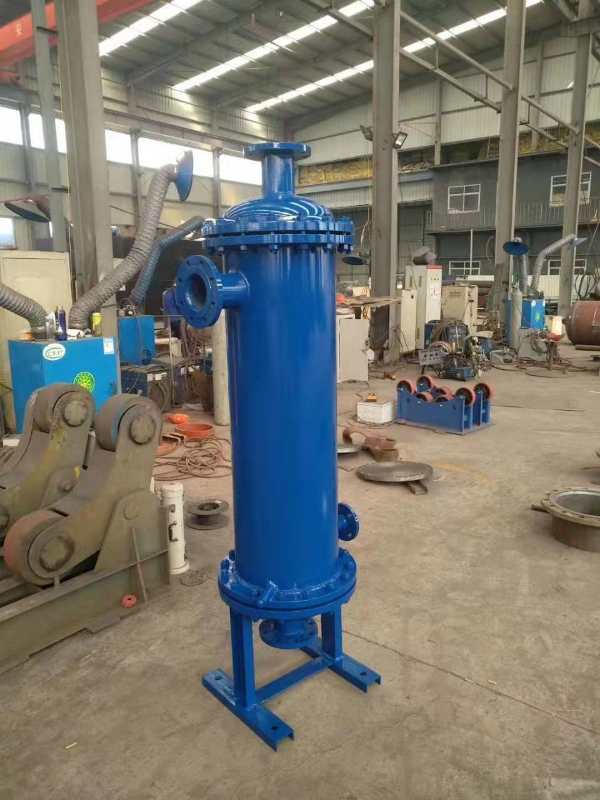
Product Overview
The Vertical Shell and Tube Heat Exchanger is a classic shell-and-tube heat exchange device consisting of a shell, tube bundle, tubesheets, and baffles. One fluid flows inside the tubes while the other flows outside (shell side), achieving heat transfer through the tube walls. With its robust structure and wide operating pressure and temperature range, it is one of the most commonly used heat exchange devices in petrochemical, power, and metallurgical industries.
Working Principle
The core heat exchange element of the Vertical Shell and Tube Heat Exchanger is the tube bundle, fixed at both ends on tubesheets. The tube-side fluid enters from one end of the channel and flows through the tubes; the shell-side fluid enters from one side nozzle and flows transversely across the tube bundle under the guidance of baffles, then exits from the other side nozzle. The baffles create cross-flow on the shell side, enhancing the shell-side heat transfer coefficient.
Technical Features
- Robust and reliable structure, withstands high temperature and high pressure
- Wide range of applicable media, handles corrosive and non-corrosive fluids
- Multi-pass tube side design accommodates various flow and temperature difference requirements
- Easy cleaning, tubes can be mechanically cleaned internally
- Mature manufacturing process, high degree of standardization
- Multiple material options: carbon steel, stainless steel, copper alloy
Applications
- Heating, cooling, and condensation in petroleum refining and chemical production
- Condensers, oil coolers, and feedwater heaters in power plants
- Furnace cooling and waste heat recovery in metallurgical industry
- Condensers and evaporators in refrigeration systems
- Heat exchange stations in central heating systems
- Cooling systems for ships and marine engineering
Selection Guide
When selecting the Vertical Shell and Tube Heat Exchanger, determine the heat exchange area and number of tube passes based on flow rates, temperatures, pressures, and physical properties of both fluids. Corrosive fluids are typically placed on the tube side for easier maintenance and tube bundle replacement. For fouling-prone media, larger tube diameters and lower flow rates facilitate cleaning.
Related Products
Explore more Vertical Shell and Tube Heat Exchanger series products: