
1、 Product Introduction:
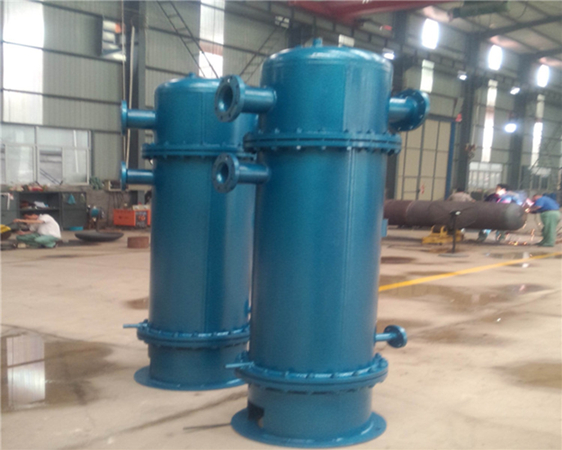
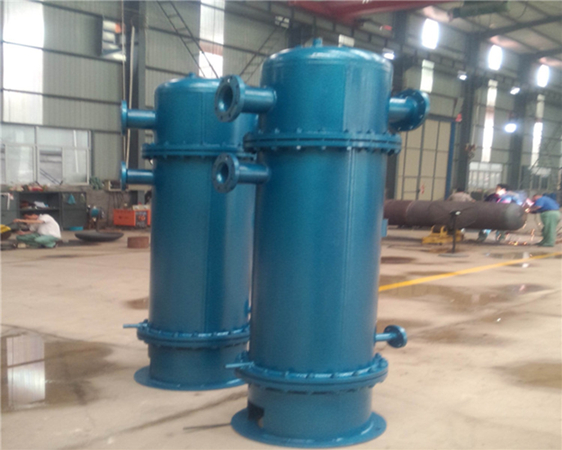
Heat exchanger is a device that transfers a portion of the heat from a hot fluid to a cold fluid, also known as a heat exchanger. Heat exchangers are common equipment in many industrial sectors such as chemical, petroleum, power, food, and others, and play an important role in production. Heat exchangers can be used as heaters, coolers, condensers, evaporators, and reboilers in chemical production, and are more widely applied.
2. Product features:
Shell and tube heat exchanger (also known as tube and tube type) Heat exchanger is a shell and tube heat exchanger mainly composed of shell, tube bundle, tube plate, and head. The shell is mostly circular and contains parallel tube bundles or spiral tubes inside, with both ends of the tube bundle fixed to the tube plate. This year, it has gradually been promoted in the domestic market. Shell and tube heat exchanger with spiral tube bundle design can maximize turbulence effect and increase heat transfer efficiency. The asymmetric design of the inner shell and tube layer can reach a maximum of 4.6 times. This asymmetric design determines its wide application in the field of steam water heat exchange. The shell and tube structure will greatly improve production efficiency and save costs.
3. Structural principle:
The condenser is an important component among the four major refrigeration parts, which can quickly transfer the heat in the pipes to the air near the pipes. Most cars are placed in front of the water tank. A device that converts gas or steam into liquid. Power plants use many condensers to condense the steam emitted by turbines; Condensers are used in refrigeration plants to condense refrigeration vapors such as ammonia and fluorocarbons. Condensers are used in the petrochemical industry to condense hydrocarbons and other chemical vapors. The device that converts vapor into liquid during the distillation process is called a condenser. All condensers operate by taking away the heat from gases or vapors.
4. Installation
4.1.1 Site and Foundation
4.1.2 Sufficient space should be left at both ends of the heat exchanger to meet the needs of disassembly, assembly, and maintenance.
4.1.3 The foundation and embedded foundation bolts should be made according to the dimensions provided in the completion drawing of the heat exchanger.
4.1.4 Before installation, a pressure test should generally be conducted. When required by the drawing, an air tightness test should be conducted.
4.1.5 Connect pipelines according to the requirements of the completion drawing pipe mouth table. When connecting pipelines, valves should generally be installed at the pipe mouth, and strong assembly should be avoided when connecting pipes.
4.1.6 When tightening the foundation bolts of the heat exchanger, it should be done in diagonal order and appropriate thread lubricant should be applied.
2. Test Drive
2.1 Before test drive, check the drawings for any special requirements or instructions, whether there are any special markings on the nameplate, whether the pipe plate is designed for differential pressure, and whether there are any special requirements for the pressure test and test drive procedures. Before testing, the entire system should be cleaned to prevent debris and dirt from entering the heat exchanger. If there is no bypass in the 2.3 system, a temporary bypass should be added during testing.
2.4 Open the vent and fill the tube with cold water (or cold fluid) first. When the medium is steam, the residual liquid should be drained before driving to avoid water hammer and corrosive medium. After parking, the residual medium should be drained completely.
During driving or parking, the temperature should be slowly increased and decreased to avoid causing excessive pressure difference and thermal shock.
3. Maintenance,
3.1 The heat exchanger shall not operate beyond the conditions specified on the nameplate.
3.2 The inlet of the heat exchanger should be equipped with a dirt remover.
3.3 The cold circulating water of the heat exchanger should be softened water. It is recommended that users install electronic water treatment equipment or softened water devices at the cold water inlet to avoid scaling of the heat exchanger and prevent blockage or scaling of the heat exchange tubes.
3.4 The temperature drop of the medium in the tube and shell side should be regularly monitored, and the leakage and scaling of the heat exchanger should be analyzed. When the pressure drop increases and the heat transfer coefficient decreases beyond a certain value, an effective cleaning method should be selected based on the structure of the medium and heat exchanger.
3.5 The vibration of the tube bundle should be monitored regularly.
3.6 Attention should be paid to draining the liquid from the equipment in winter when not in use to avoid freezing and cracking the equipment.
3.7 Take appropriate measures to prevent corrosion after discontinuation.