
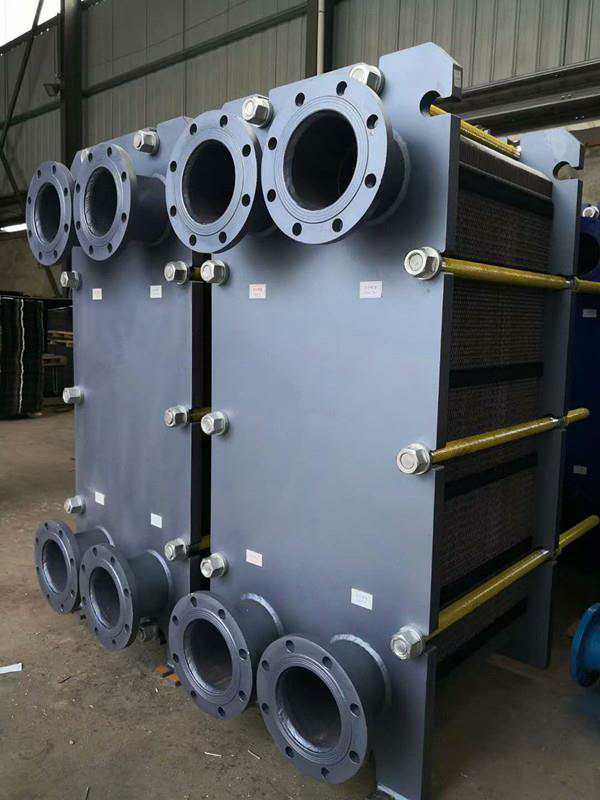
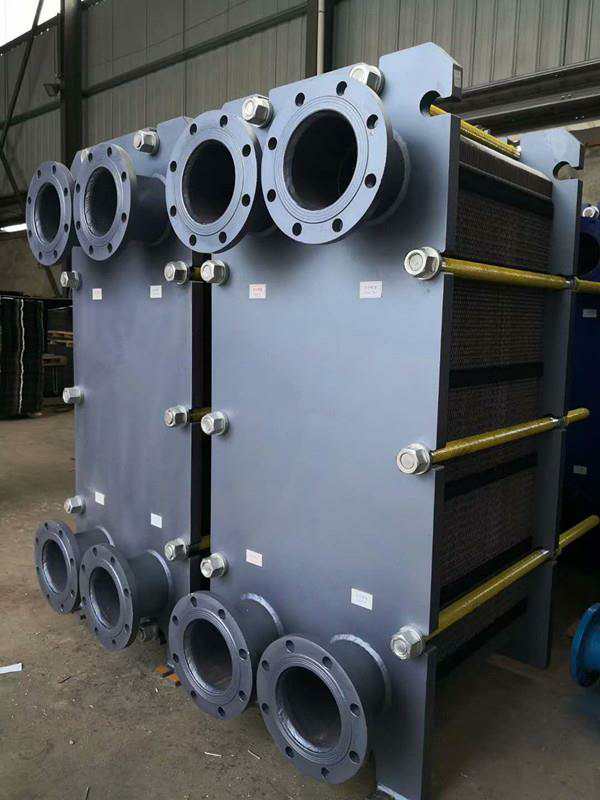
How to clean plate heat exchangers is a problem faced by many people. Below are the steps and methods for cleaning.
First, rinse the heat exchanger in an open manner to ensure that there are no impurities such as mud or scale inside the heat exchanger. This can improve the effectiveness of acid washing and reduce the acid consumption of acid washing.
Due to the presence of numerous calcium, magnesium, and bicarbonate salts in water, these substances will decompose into calcium carbonate when heated. Therefore, acid washing should be carried out by pouring the cleaning solution into the cleaning equipment first, and then injecting it into the heat exchanger.
Acid washing: Soak the heat exchanger filled with acid solution statically for 2 hours, and then continuously cycle dynamically for 3 to 4 hours, alternating between positive and negative cleaning every 0.5 hours. After acid washing, if the pH value of the weak acid solution is greater than 2, the acid solution can be reused. Otherwise, the acid solution should be diluted and neutralized before being discharged.
Then perform alkaline washing: After the acid washing is completed, prepare sodium hydroxide, sodium, polonium, and softened water in a certain proportion, and use dynamic circulation to perform alkaline washing on the heat exchanger to achieve acid-base neutralization and prevent corrosion of the heat exchanger plates.
Finally, rinse with water: After alkaline washing, rinse the heat exchanger repeatedly with clean softened water for 0.5 hours to thoroughly remove any residue inside the heat exchanger.
System pressure testing is also required: water flushing and pressure testing are to remove accumulated dust, sediment, detached metal oxides, and loose dirt from the system, and the flow rate should be less than 0.3 meters.